SO, YOU WANNA BE A DJ ?
A few words of advice!
Please analyse your interest in music and find out whether you want to play instruments, sing songs or play and mix music. After all, you’re talking about some valuable years of your life. Once sure that DJ’ing is where you want to go, take it very seriously and be ready to work your butt off – nothing comes easy! If you want to do it for the money, don’t even try. Like all professions, money is less in the beginning but once you start making your mark, it gets better. And it’s a Glamourous profession with lots of Money & Fun 😉
CLICK HERE to know all about the DJ !
SO, DO YOU WANT TO BE A PROFESSIONAL DJ ?
CHOOSE THE COURSE SUITABLE TO YOU BELOW
WHO IS A DJ?
Disc jockeys (DJs) present, mix and link recorded music for a live or radio audience. They use a wide variety of equipment varying in sophistication including turntables, mixers, tape decks, amplifiers, headphones, graphic equalizers, lighting effects, computers and multimedia & sound processors.
There are three main types of DJs:
Radio DJs are broadcast presenters that work at radio stations providing links between music tracks. Links are filled with, for example:
· conversation, anecdotes or jokes
· phone-ins
· adverts
· news, weather and traffic items
· interviews.
Radio DJs usually present a programme that reflects their personality and musical interests. They use mixing techniques, improvisation and work to a tight timing schedule.
Club DJs mix music and use other techniques to create a performance for a dance audience. They need to be aware of the venue’s music policy and their clientele. Techniques they may use include:
· pitch control
· scratching
· drop and MP3 mixing
· cross fading
· beat matching and juggling
· effects processing
· sampling and sequencing.
Mobile DJs provide musical entertainment at weddings, parties and other social events. They try to create a fun atmosphere by being the Master of Ceremonies (MC). They normally provide their own records (vinyl and CDs) and equipment.
Depending on the role, DJs may be required to market and promote themselves.
Hours and Environment –
DJs work irregular and varied hours depending on their time slot, for example a radio DJ may work a morning show or a club DJ will often work into the early hours of the morning. DJs are likely to spend some time preparing a play list, setting up equipment and traveling to venues.
The working environment varies. Mobile DJs might work in village halls, pubs, public buildings, or outdoors. Radio DJs may work in air-conditioned studios or occasionally at outdoor events. Club DJs normally work in hot, loud and smoky environments.
Some DJs work on a part-time or casual basis combining DJing with another source of income.
Skills and Interests
To be a DJ, you should:
· have a keen and well-developed interest in music
· be technically competent with your equipment
· have a confident and outgoing personality
· have some understanding of sound engineering and music technology
· be a clear and articulate communicator, particularly for radio
· have a good sense of rhythm
· be creative and enthusiastic about music
· have good timing and co-ordination
· have good business skills
· be able to work calmly under pressure and organise your own workload.
Entry –
There is no set career route for DJs and formal qualifications are not always necessary. However, commercial radio sets it’s own standards for recruitment and may require a good general standard of education, particularly a high standard of written English along with voice quality and other requirements.
Entry differs depending on whether a DJ works for an employer like a radio station, or is self-employed. It is important that prospective DJs can demonstrate their skills and knowledge of a particular area of music, technical equipment and DJing techniques. Freelance DJs will need to promote themselves as a business by, for example, designing and distributing flyers.
Prospective radio DJs can gain experience from work placements with the commercial radio stations, but will need to be good communicators and highly motivated as competition for places is strong. Some knowledge of digital audio editing software, like Cool Edit Pro or Adobe Audition, might be requested. It is important that new entrants do some research about their potential audience. Working in a related job such as radio production assistant, may be a useful starting point. Voluntary work with hospital, college or community radio is a valuable way of gaining practical experience.
Club DJs often start by building their reputation in bars, making contacts and moving on to bigger and more prestigious venues with the aim of establishing a residency at a club. They will often create a mix CD or demo and use this to demonstrate their skills.
Mobile DJs need to have their own equipment and music, and build their reputation through word of mouth or advertising.
Opportunities
Most club, radio and mobile DJs are either self-employed or are offered freelance contracts. It is important that they build their reputation, are successful networkers and are committed to self-promotion. Occasionally, DJs are employed by clubs and the hospitality industry. Successful DJs can find work opening events and giving personal appearances. There are also increasingly good opportunities for experienced club DJs to work abroad. It is possible for DJs to move into related roles in music production, music retailing and recording. They could become club promoters, agents, remix producers, record distributors or even musical artists in their own right.
FEW PAST STUDENTS

Jazzy’s very first student, DJ Freddy has played at various Clubs & Events in Delhi, Shillong and Guwahati. Freddy is also associated with a club in Guwahati called ‘Illusion’. He plays retro, hip-hop, reggae, reggaeton, house & electro.
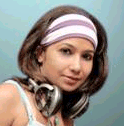
DJ Samantha hails from Bangalore and this Djane cannot be classified under one group as she has mastered the art of mixing and can mix anything from Bollywood to Club, Retro to Rock, Hip Hop to R ‘n’ B and Trance to House.

DJ Aiz trained under Jazzy Joe to become the First Certified Dj from Nagaland and went on to open his own club called HOT SPOT at Dimapur in 2004. Has played extensively in Dimapur and has arranged events all over.
FULL TIME PROFESSIONAL DJ COURSE
NEW BATCH DATE – 2nd October 2017
DURATION – 100 Hours (Split between 12 days + Field Trip)
BATCH TIMINGS – 11am to 7pm (Sunday Holiday)
COST OF ENTIRE COURSE – Rs. 36,000/- Only
BOARDING COST (If Required) – Rs. 6,000/- Only (Sharing Accomodation at Venue)
CERTIFICATION – A certificate is given to students on the successful completion of the course.
The course syllabi includes:
History of DJ’s & Various Music Genres
Introduction to Equipment and Functions
Use of CD Players, Turntables and Mixer
Hand Placement, Moving CD/Turntable
Releasing Tracks/Records
Basic and Advanced Mixing & Cutting Techniques
Matching Pitch between two Tracks
Club Equipment Setup
Basic Scratching (Turntables)
Club Oriented Guidance
Professional Grooming
BASIC MOBILE DJ COURSE
NEW BATCH DATE – Call 09811553223 for next batch
DURATION – 60 Hours (Split between 6 days + Field Trip)
BATCH TIMINGS – 10am to 7.30pm (Monday to Saturday) (Maximum of 3 Students per batch)
COST OF ENTIRE COURSE – Rs. 30,000/- Only
BOARDING (If Required) – Rs. 4,000/- Only on Sharing basis for two (at Venue)
CERTIFICATION – A certificate is given to students on the successful completion of the course.
History of DJ’s & Various Music Genres
Introduction to Equipment and Functions
Use of CD Players and Mixer
Releasing Tracks
Basic Mixing Techniques
Matching Pitch between two Tracks
Equipment setup
Professional Grooming
CLUB DJ (PROFESSIONAL) - SUNDAYS ONLY
NEW BATCH DATE – 1st October 2017
DURATION – 80 Hours (8 Sundays + Field Trip)
BATCH TIMINGS – 11am to 8.30pm (Sundays Only)
COST OF ENTIRE COURSE – Rs. 36,000/- Only
CERTIFICATION – A certificate given on successful completion of the course.
The course syllabi includes:
History of DJ’s & Various Music Genres
Introduction to Equipment and Functions
Use of CD Players, Turntables and Mixer
Hand Placement, Moving CD/Turntable
Releasing Tracks/Records
Basic and Advanced Mixing & Cutting Techniques
Matching Pitch between two Tracks
Club Equipment Setup
Basic Scratching (Turntables)
Club Oriented Guidance
Professional Grooming

TURNTABLIST / VINYL DJ COURSE
NEW BATCH DATE – Call 09811553223 for next batch
DURATION – 60 Hours (6 days)
BATCH TIMINGS – 11.00am to 9pm
COST OF ENTIRE COURSE – Rs.36,000/-
BOARDING (If Required) – Rs. 4,000/- Only on Sharing basis for two (at Venue)
CERTIFICATION – A certificate is given to students on the successful completion of the course.
The course syllabi includes:
History of DJ’s & Various Music Genres
Introduction to Equipment and Functions
Use of Turntables and Mixer
Hand Placement, Moving Turntable
Releasing Tracks/Records
Basic and Advanced Mixing & Cutting Techniques
Matching Pitch between two Tracks
Basic & Advanced Scratching Techniques on Turntables
Turntablism Oriented Guidance
Professional Grooming
CLEAN ACCOMODATION FOR OUT-STATION & INTERNATIONAL STUDENTS
Due to an increasing demand and lack of proper places to stay, Jazzy has now made a room specially for his students at the same venue. So, students can now stay in a secure, clean & convenient place with no travelling required. There is a variety of eating places very nearby so students can eat as per their choice & budget. Along with being right next to the classroom, the accomodation also features a fridge to keep water cold, cabinet for clothes, full-length mirror, comfortable woven beds, brand new sheets & curtains, ceiling fan, cooler, lounge chairs and an attached toilet/bathroom. Towels, Soap, Slippers & Drinking Water are also provided. Cost for staying for duration of 14 days is Rs. 6,000/- only.
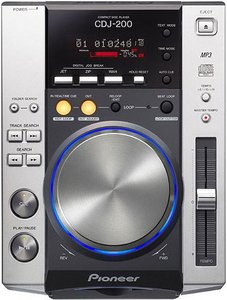
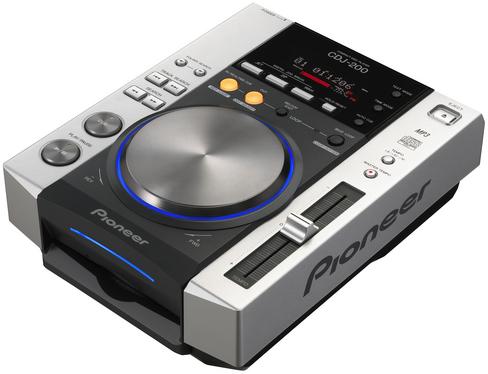
EQUIPMENT USED IN THE WORKSHOP
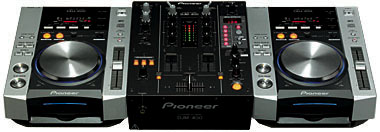
PIONEER CDJ200 CD PLAYERS
Creating a new standard for Pro-DJ CD decks, the CDJ-200 combines the key elements of Pioneer Professional CDJ players with a host of innovative features such as full-function MP3 playback, Hot Loop, Beat Loop and the unique one button Loop Cutter, for creating loops within loops until the beat has been cut to infinity. This technical excellence is complemented by a design that’s visually stunning, DJ friendly,Robust,compact & portable making it the ideal choice for serious home DJs, bars & other installations.
Since the CDJ-200 is fully MP3-compatible, aspiring DJs can now include the very latest downloaded tracks in their sets, without having to convert the audio from other formats. The MP3 functionality also allows DJs to locate tracks more quickly (via Folder Search) and to see the name of the disc, artist and song on the unit’s bright dot-matrix display window. This screen has a bar graph showing the elapsed and remaining playing time of a track, plus an Auto BPM Counter, giving DJs the real-time information they need to create better mixes more quickly. The unit has a tempo read-out too, as well as a separate Master Tempo button with 3 settings for locking the pitch of a track as it’s sped up or slowed down. The unit uses an electric-blue light at strategic locations to give the DJ constant feedback on the status of the CD and the effects in use. The light above the CD-slot, for example, shows that there’s no disc on board and also guides the DJ to the user-friendly quick-load slot. With the disc inserted, that light goes off and a blue illuminated ring appears around the edge of the Jog Wheel – indicating that CD is loaded & ready for playback.
An established highlight of Pioneer’s Pro DJ CDJ players, the Jog Wheel can be used to speed up or slow down the music, to fine-tune cue points manually, or to control the mix with the help of another proven feature – the Digital Jog Break. This has three effect buttons (Jet, Zip, Wah) for creating original sounds as the DJ manipulates the Jog Wheel. When the Digital Jog Break is on, the blue ring flashes quickly. Once the HOLD/RESET button is used, the flashing slows down. With the effects off, the continuous blue light returns. The CDJ-200 also has a unique Resume function that takes effect if a CD is ejected accidentally. Once the DJ re-inserts the disc, it automatically starts playing from exactly the point where it stopped. The unit has a Digital Out socket too, so that all of the digital features available in DJ Mode can be carried over to a connected digital environment, as well as a headphone jack (with volume control) which allows the DJ to monitor a CD without connecting to a mixer or external amplifier.
PIONEER DJM400 MIXER
The DJM-400 packs a wide variety of effects for creative mixing. The effects, that automatically detect the BPM of the music and sync to the beats include: Delay, Echo, Filter, Flanger, Phaser, Robot and Roll, all of which are processed at 24bits for the highest quality sound. In addition, by using the newly-adopted Beat Select Button, the DJM-400 automatically sets the effect time linked to the BPM for more intuitive play and responsive remixing.
The intelligent 96kHz/24bit sampler automatically detects the tempo of a track during playback, sampling it for four beats, then loops the sample. As the sampled audio is in sync with the beat of the track being played (no matter the tempo) the DJ is given more time to be creative. Samples are automatically beat matched and up to five samples can be stored in memory. Each of the DJM-400 ‘s channels has a 3-band Kill EQ which ranges from +9dB to -8(infinity) for total control of the sound. The DJM-400 has been designed with as a perfect partner for the MP3 compatible CDJ-200 both in terms of style and function. When combined, these units create a small, portable yet powerful and robust DJ setup that offers exceptional versatility and performance.

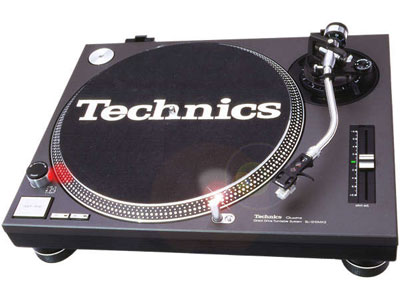
TECHNICS SL1210mk2 TURNTABLE
Long recognized by the world’s DJs as the best club-use turntable, the famous SL-1210 series is without a rival. That’s because it’s heavy-duty design, vibration-resistant construction, and mechanical precision makes a lot of what DJs want to do possible. This deck features a Direct Drive motor, quartz movement for total accuracy, adjustable tone arm weights, anti-skate control, a pop-up target light and a sliding pitch control. With each new improvement, as form follows function, the Technics turntable has become a thing of beauty. From the community centers at the beginning of the disco era to the clubs of today, Technics decks have been the standard for over thirty years.
PIONEER DJM400 MIXER
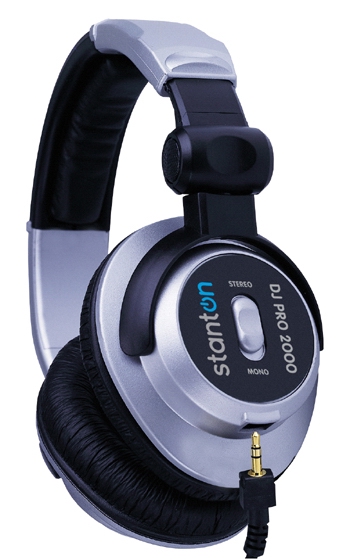
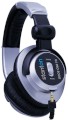
A high-performing, low-cost headphone, the DJPRO2000 is perfect for DJing at home, at parties, or in a club. Special features are –
· Rotating ear-cup allows for flexible positioning and single sided or shoulder rest wearing styles
· Detachable coiled cord (3m) for safe storage and easy replacement
· 1/4″ connector
· Integrated mono or stereo monitoring
· Wide frequency response 20 Hz-30 KHz for outstanding sound reproduction
· Closed ear-cup design for sound isolation
· 50mm drivers for clear low end reproduction and superior power handling
· Convenient folding design for ease of storage and transportation